
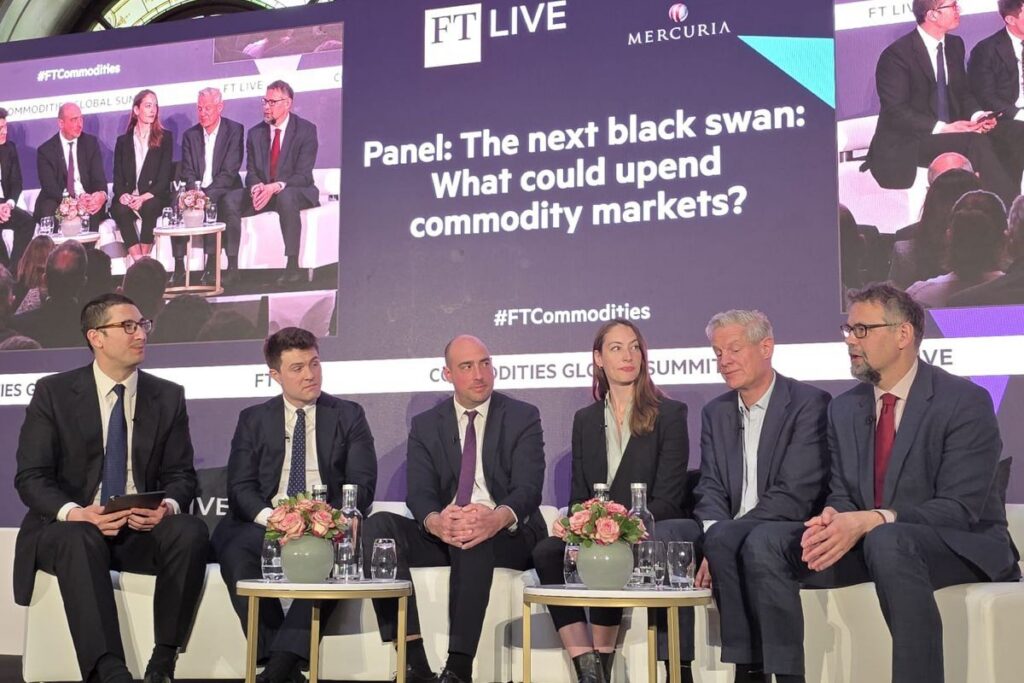
The Financial Times Commodities Summit is one of the most important gatherings of the year for the global energy and commodities sector. See our representatives’ first impressions about the industry’s reaction to the ongoing conflicts in the Middle East and shared insights into how they plan to overcome supply disruptions.
Qorvis was on the ground at the Summit in Lausanne supporting clients as they spoke on panels, shared market insights, and connected with partners amid ongoing geopolitical disruption.
Here’s what we’re hearing — and what it means for energy markets and supply chains.
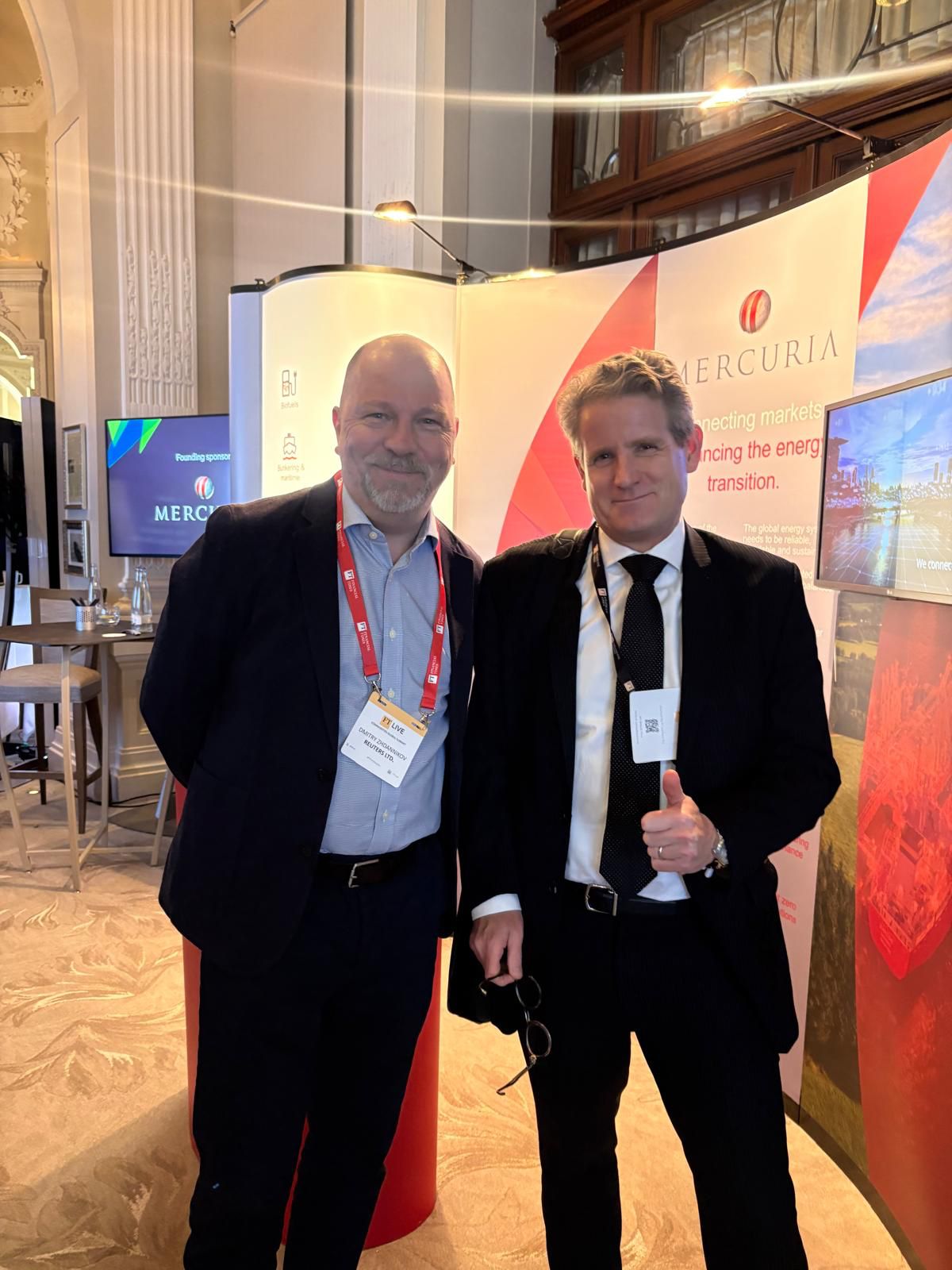
Qorvis CEO Matt Lauer with Reuters’ Editor in Charge, EMEA, Energy, Dmitry Zhdannikov
Grace Fenstermaker, Managing Director EMEA, Qorvis
This year, while extreme market volatility due to the war in Iran dominated the conversations, traders, trade finance banks, and government officials also reflected on how geopolitics is shaping commodities markets more broadly.
Sanctions on Russia and Iran are increasingly being paired with more proactive tools— –industrial policy, export financing, and supply chain restructuring – —to drive longer-term geopolitical outcomes. Their effectiveness is now closely tied to whether the U.S. and its allies can offer credible economic alternatives to countries reliant on sanctioned supply, with coordination across jurisdictions becoming more operational and enforcement dynamics evolving in parallel.
These geopolitical pressures are playing out most visibly in energy markets. Discussions centered on positioning in highly volatile conditions, constraints in physical oil flows –particularly through the Strait of Hormuz – and evolving trading strategies amid dislocation in benchmarks such as Dubai crude. There were also broader questions around market structure, incentives, and integrity, including concerns around information asymmetry and the increasing sensitivity of prices to geopolitical signaling.
In LNG, there is a notable disconnect between sentiment and pricing. While industry participants remain broadly bullish given underlying geopolitical risks, prices continue to appear muted. The market is in a “wait-and-see” phase, driven by buyer caution and uncertainty around the duration of potential disruptions. That balance is expected to shift as seasonal demand builds toward winter, at which point physical fundamentals are likely to reassert themselves more forcefully.
On metals, there was a growing sense that markets – particularly copper – are entering a more structurally supportive phase, with price strength increasingly underpinned by physical and strategic demand, especially from China. Chinese buying is seen as establishing a firmer floor, while aluminum is also viewed positively given ongoing supply constraints and global energy limitations. At the same time, participants acknowledged downside risks tied to prolonged geopolitical conflict or a broader economic slowdown, with many emphasizing flexible, scenario-based approaches to managing exposure.
A number of emerging narratives are also gaining traction, particularly in the media. The geopolitics of metals – especially in regions like the DRC, Kazakhstan, and Latin America – are becoming more central, alongside growing recognition of the constraints facing the energy transition due to limited supply of key materials.
These same forces are also driving disruption across global shipping markets. Geopolitical tensions in the Middle East, evolving sanctions regimes, and shifting trade flows are contributing to fragmentation, with restricted access through key chokepoints like the Strait of Hormuz, distorted freight benchmarks, and increasing advantages for state-backed supply chains, particularly China. At the same time, uneven enforcement and the complexity of sanctions compliance are adding friction to global flows, compounding existing pressures from weakening hedging mechanisms and slowing momentum behind green shipping initiatives.
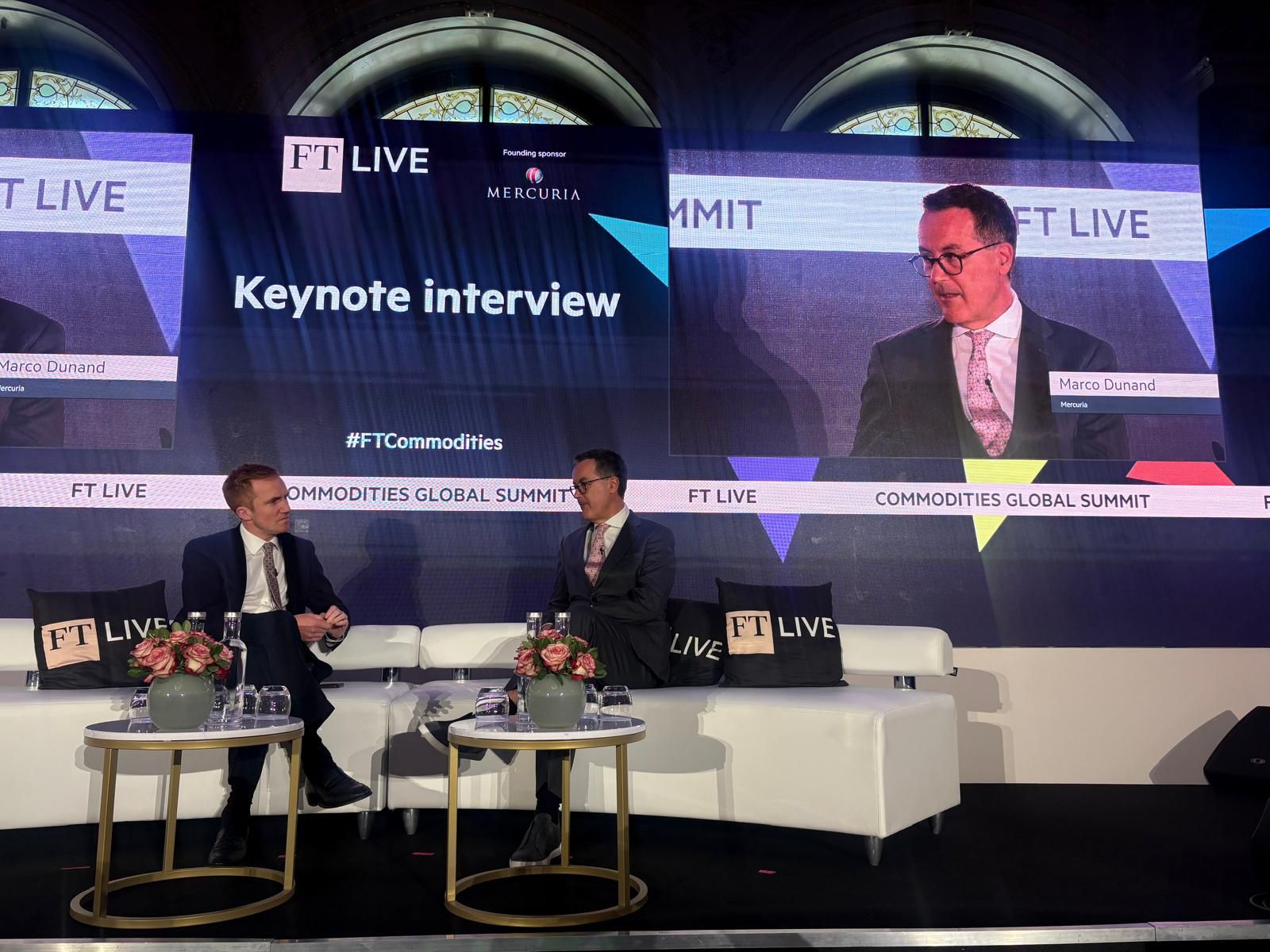
Mercuria Energy Group CEO Marco Dunand answers questions
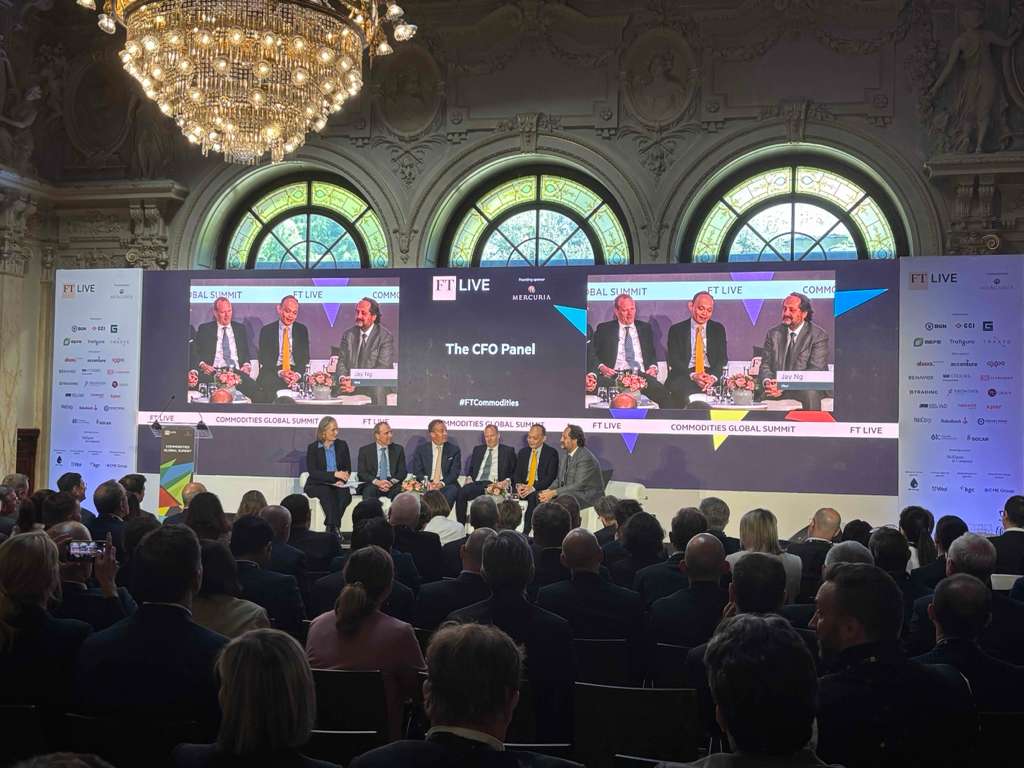
CFOs of the biggest trading companies discussing financing challenges in turbulent times
Benoît Lioud, Managing Director, Qorvis Geneva
I was struck by the strong participation at the 2026 FT Commodities Summit, with delegates eager to learn more from experts and professionals about the impact of the ongoing crises on commodity markets. Much was said about risks and how trading firms are preparing to weather market shocks. But the debates focused primarily on the impact on market fundamentals. What are the short-term solutions to ensure the continued supply of oil and petroleum products? Which countries are most affected by the crisis? Can we anticipate a longer-term collapse in demand if countries are forced to seek alternative energy sources? Beyond short-term shocks, the discussions turned to the future, confirming that the recurrence of crises is accelerating the need to strengthen the security of global commodity supplies. This is an issue that will undoubtedly transform all global economies.
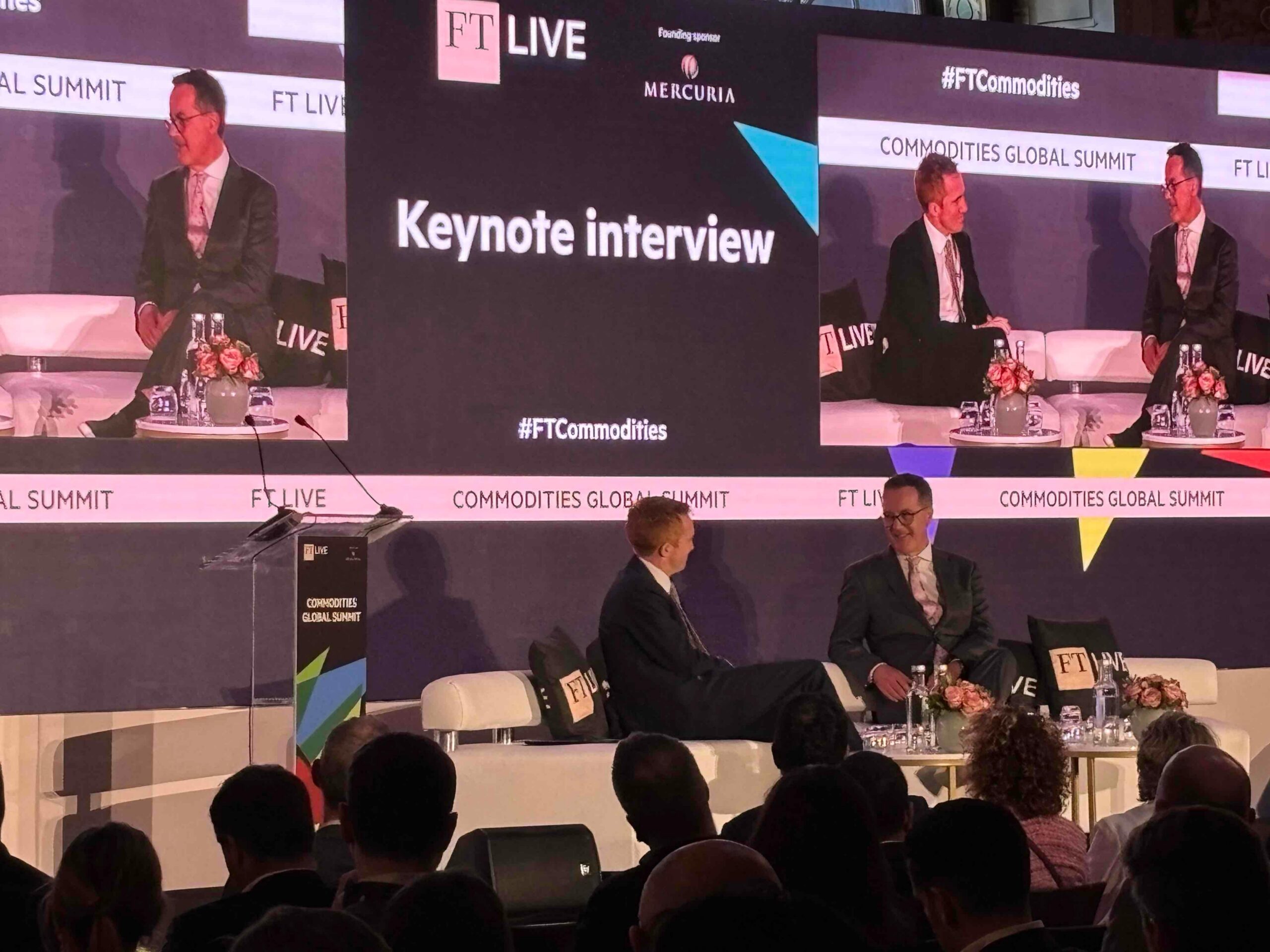
Marco Dunand, CEO of Mercuria Energy Trading is elaborating on the company’s strategy
Ian Dollar, Analyst, Dubai
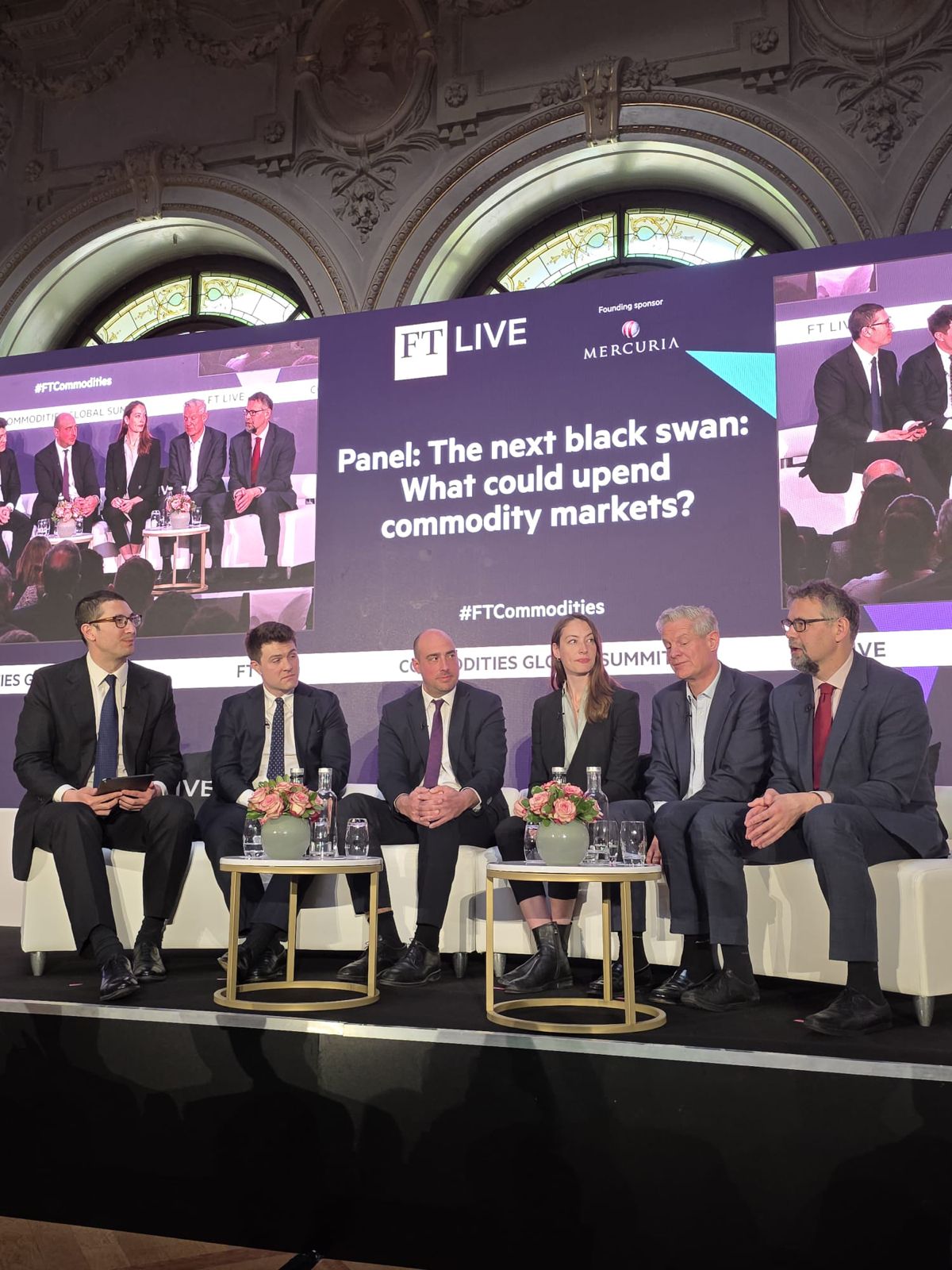
The FT Commodities Global Summit in Lausanne was dominated by discussions of the Iran War and the supply shocks that the conflict has induced across commodities markets. While there are ways to mitigate the impact of the disruption to Hormuz trade – such as using alternative inputs or, in the case of oil, using alternate routes like the Saudi East-West Pipeline – the longer the disruption of the Strait of Hormuz endures, the deeper the fundamental challenge becomes. It is during crises like this when the expertise of commodities traders is most essential as they use every mechanism at their disposal to get inputs and products to market. It was also noted by those at the event that it is helpful to some extent for governments to enact mitigation strategies such as releases from strategic reserves. Considering what regulations can be relaxed to soften the blow of supply disruptions would also be a sound endeavor and is an area where industry and government can collaborate to create better outcomes for the global economy.