
By Shamai Frenkel
“That episode gets scary quickly — which is good.”
That’s Tom Sharpe on the moment in Sky’s The Wargame when Britain’s vulnerabilities become impossible to ignore.
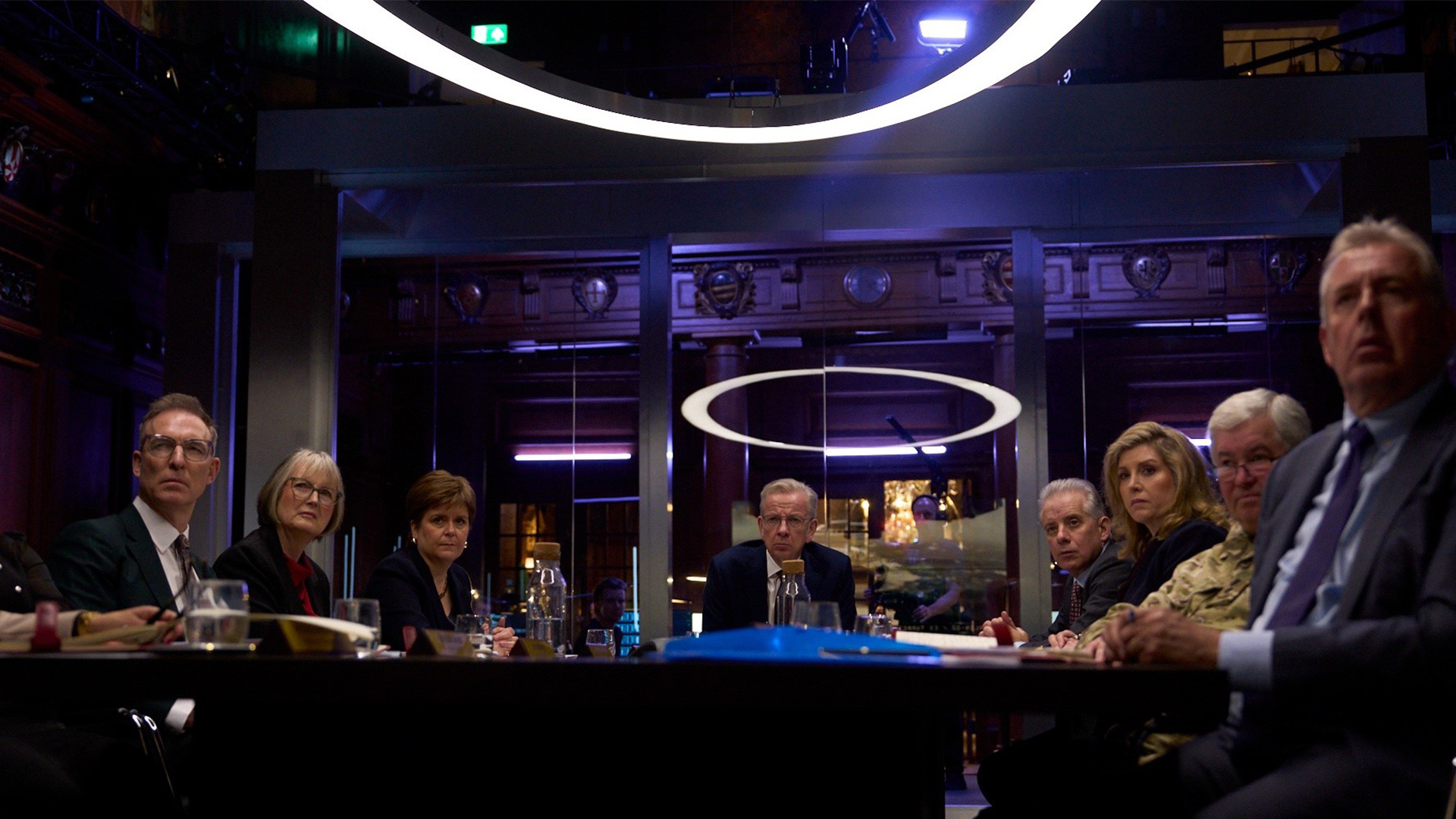
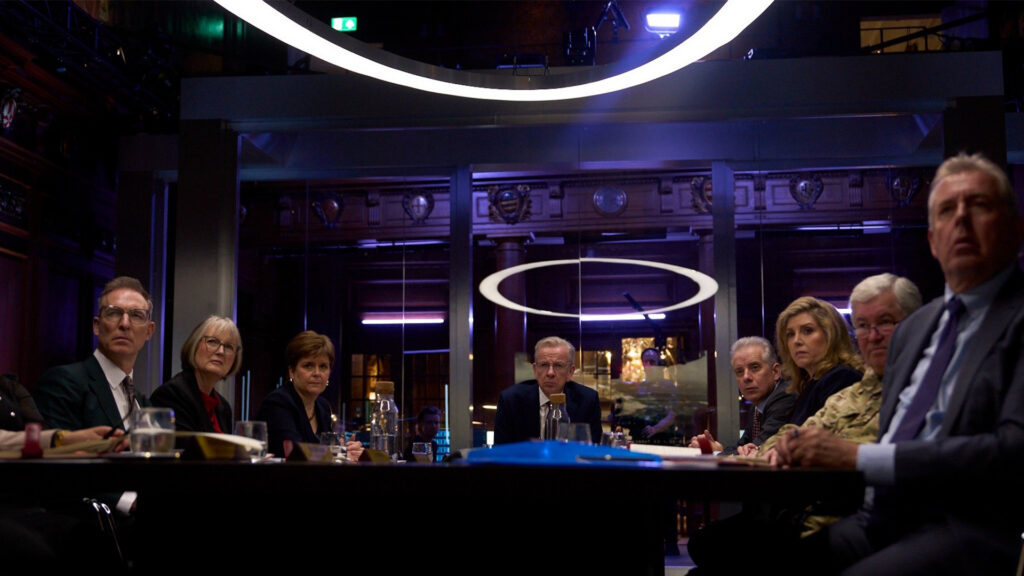
Six months from now, Russia attacks British soil. Senior politicians, intelligence officials, and military leaders must tackle that crisis inside a sealed briefing room, forced to make the calls that would shape Britain’s real response to a national security emergency. That’s the premise of The Wargame, out now on Sky.
“We are vulnerable, and everyone knows it,” says Qorvis Senior Advisor Tom Sharpe, OBE, who served as the naval advisor inside the simulation.
“There were three ex-forces officers in the show — one from each service — and we were in an operations room that joined the main COBR room,” Sharpe said. He joined, he added, in hopes the show could put Britain’s defense weaknesses in front of a public that rarely thinks about them: “We have underinvested in UK defense for decades now, and to reverse that, something needs to be done to make defense a voteworthy subject in the UK. We are still prioritizing spending on just about everything else, despite threat levels visibly climbing.”
Sharpe spent 27 years as a Royal Navy officer, commanding four warships, with his final posting as the Ministry of Defense’s Naval spokesman. This experience put him in high-pressure decision-making rooms, not unlike the one built for the show.
Asked how realistic the show’s premise actually is, Sharpe frames it as low probability, but high impact.
“Whilst I’m glad it’s low probability, the risk of miscalculation is ever present,” he said. “If this is severe enough, it could lead to the sort of attacks we see in this show. Only the other day, a Russian warship fired flares at a Danish military helicopter. They conducted large caliber gunnery in the English Channel recently and fired warning shots at a yacht with two pensioners in it.”
Asked which Russian capability the public most underestimates, he pointed to something often overlooked: submarines.
“These are well run and professionally operated — unlike much of their surface fleet, and their performance in the Black Sea — and they are getting harder to detect year on year,” he said. “They are also rapidly increasing their incursions into the North Atlantic, where they sit on top of our critical underwater infrastructure: the transatlantic cables for financial transactions, internet cables, power cables, and gas pipes. This has become routine just at the moment that our ability to counter it, or even deter it, is at its lowest.”
In an age dominated by social media and misinformation, the messaging strategy is nearly as important as the military strategy. It’s no different inside the simulation.
“Because the COBR room represented the highest levels of government, including the PM, communications was never far away from the decision-making process,” he said. “In fact, it was basically symbiotic. Of course, what we were actually going to do was considered first, but then how to communicate that to the British public followed very shortly afterwards.”
Sharpe is blunt about why he thinks the show matters for viewers who don’t normally follow defense policy.
“A huge percentage of our population either doesn’t care about defense, think it’s someone else’s problem, don’t understand it, or don’t realize how thin we have become,” he said. “And it’s not just defense, it’s security and resilience also. For example, the ports on which we depend on for survival as an island nation are basically undefended. We have become lazy in our thinking. Hopefully this show will shock some people out of their complacency.”
His central message for viewers is how Britain should prepare for whatever scenario may come.
“The key point for me is not how great the threat is, or the likelihood of direct attack as seen in this show. That is a distraction,” Sharpe said. “For me the key point is that no matter what your view of the threat is, if you look weak, it goes up.”
Asked if anything was oversimplified for TV, Sharpe simply said, “not really.” Inevitable, four days of filming cut back to four episodes meant some of the more nuanced responses and many interesting conversations didn’t make the cut, but the basic premise, and our ability to deal with it, is spot on.
Sharpe writes regularly about naval power, maritime security, and Russia’s so-called “shadow fleet” in his Telegraph column — work that won him the 2025 Desmond Wettern Award for Best Writer at the Maritime Media Awards.
The Wargame is a four-part series now streaming on Sky and NOW.
Read Tom’s latest article in The Telegraph for more of his thoughts on The Wargame.