
By Baihe (Lilia) Nangong
Competitive.” “Hostile.” “Adversarial.” These are words often used to describe the bilateral relationship between the U.S. and China over the past decade, which has fluctuated from slightly chilly to something approaching Cold War–like dynamics.
However, “unpredictable” is likely the most accurate.
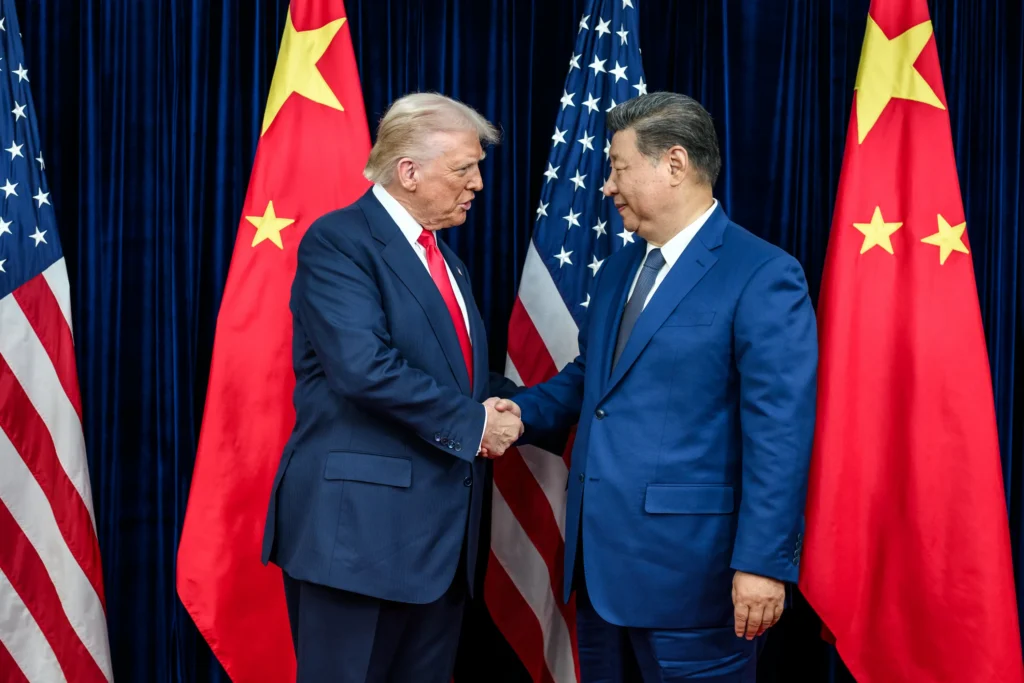
That’s why most diplomats would say the immediate objective of U.S.-China diplomacy is to establish a modicum of predictability in a relationship long defined by friction. The summit between Presidents Trump and Xi reflects that ambition; now is the time that American entities reassess their approach to China.
For 25 years, Qorvis has advised companies, trade associations, and domestic and foreign government entities on how to understand and communicate complex and challenging bilateral relationships. We have seen hardened political rhetoric obscure what is best for building a business and opening new markets. And we have watched as misreading the political environment leads to missed opportunities to establish new markets – which is why we are watching this summit closely.
The signals from the U.S. side have been surprisingly warm so far. President Trump praised China’s position on the Strait of Hormuz as “very respectful,” acknowledging Beijing’s decision not to interfere with U.S. operations. He went further, openly lauding the commercial opportunities that a recalibrated relationship with China could unlock, even floating the prospect of Chinese tankers sailing to American ports to purchase U.S. oil. The summit may also mark the beginning of preliminary discussions of a whitelist for Chinese investment in the United States, though the prospects for any such framework remain deeply uncertain. Most strikingly, a transactional approach to export controls on critical technology has emerged, with suggestions of a revenue-sharing model that would allow Nvidia to supply AI chips to Chinese customers.
While these are notable overtures, the pageantry of diplomacy should not obscure the more fundamental currents underpinning the U.S.-China relationship. The White House and Congress are not speaking with one voice. Bipartisan momentum continues to build on Capitol Hill for tighter regulation of Chinese access to advanced semiconductors. Legislators on both sides of the aisle see Beijing’s deployment of rare earth export controls not as a negotiating tactic, but as an act of weaponized economic leverage. The recently enacted BIOSECURE Act, prohibiting federal use of Chinese biotechnology, reflect a durable bipartisan consensus around decoupling Chinese firms from critical supply chains, a consensus that no summit communiqué is likely to dissolve.
In 2013, Qorvis became the first firm hired by the Embassy of the People’s Republic of China to help scale its public diplomacy capabilities. As we watch the summit unfold, we will be looking to see if there is a window of opportunity for cooperation, comity, and predictability, particularly for Chinese businesses entering the U.S. and U.S. businesses expanding into China. In that narrow window, any diplomatic warmth could create real business openings.
The longer view, however, could be considerably more sobering. Should political power shift in Washington, the rules of engagement established under the current administration could be reversed with little notice. Companies that build strategies around today’s thaw risk finding themselves exposed in tomorrow’s freeze.
The excitement generated by the summit should not obscure a fundamental truth: volatility is now a fixture, not a temporary condition, of the American political system. U.S.-China competition is more likely to accelerate than to ease.
This is precisely why experienced counsel matters. As a strategic advisory firm with deep, bipartisan relationships built over decades, Qorvis knows what works, what doesn’t, and how shifts in the political and regulatory environment impact businesses and governments alike. Our senior leaders offer what the current moment demands above all else: reliable intelligence when the tides turn, and the strategic positioning to prepare for long-term entry and exit decisions before they become urgent.
Watch: Qorvis Partner Rich Masters on what the summit means for business.
RELATED CHINA WORK: