
Amid talk of a toll on shipping in the Strait of Hormuz, the impacts of the war in Iran are felt far beyond the Gulf. Europe is preparing for long-term energy changes, pipelines are gaining use as an alternative to shipping, and investors are looking beyond trading assets to trading scenarios. Meanwhile, the U.S. seeks stability on an older front in Venezuela. Qorvis experts provide analysis.
Brussels braces for prolonged Iran war energy shock
Dan Rocha, Partner, Brussels
Brussels is treating the disruption to Hormuz as a serious and likely long-lasting energy shock, despite U.S. signals that American forces could withdraw from Iran within two to three weeks. Top concerns include pressure on industry, higher transport and food costs, tighter financial conditions, and a renewed inflation surge. The European Union Energy Commissioner Dan Jørgensen insists the EU should not assume the market impact will be short-lived, and that the European Commission is preparing a toolbox of measures to help member states manage the fallout (without getting involved in the Middle East conflict).
Officials are also planning an enhanced coordination effort between member states, with additional meetings already being scheduled and a possible emergency summit of EU leaders. The overall approach is to address the immediate impact on energy prices at the EU level to prevent uncoordinated national initiatives from disrupting the internal market even further.
From geopolitical risk premium to scenario trading
Benoît Lioud, Managing Director, Geneva
Conflicts such as the present war in the Gulf rapidly reintroduce a geopolitical risk premium into markets. This premium reflects not only the immediate impact on supply and logistics, but also the likelihood of a broader, more sustained escalation.
This dynamic fuels greater inter-class volatility. Energy moves first, and then the movements spread to metals, currencies, interest rates, and equities, with more volatile correlations and market signals that are harder to interpret. The market shifts from an asset-by-asset approach to a much more systemic one, where each asset class can become both a cause and a consequence of the overall stress.
It is in this context that scenario trading becomes essential. It does not replace traditional trading based on flows and fundamentals, but it complements it when a market undergoes a regime shift, requiring more preparation, coordination, and resources to operate effectively. In practice, this means that a trading house must be able to operate at two tempos: ordinary operations, anchored in routine execution and analysis, and an event-driven mindset, mobilized when geopolitics introduce unusual dynamics to markets.
The Tehran toll: conflict and control in the Strait of Hormuz
Tom Sharpe, Senior Advisor, London
Over a month into the latest war in Iran, heavy U.S. and IDF strikes on Iranian targets (more than 170 on March 30th alone) continue, along with a steady drumbeat of missiles and drones (between 10 and 30 a day) fired by Iran in return. The Houthis also fired for the first time this week, albeit at Israel, not shipping vessels, for now. Most weapons were intercepted but burn-through of Patriots and THAADS remains a key metric.
Iran retains control of the Strait of Hormuz. Selected ships are being granted safe passage, mainly to Asia, whilst the notion of buying it – the Tehran Toll – gains momentum. The normalization of buying safe passage is highly problematic. The Strait of Hormuz is not the Panama Canal.
It is not always helpful to think in terms of winning or losing, but Iran is currently achieving their strategic end states: regime survival, control of the Strait of Hormuz, and global economic influence. The U.S. and Israel are not, and the former is touting what amounts to a list of tactical objectives to say they are, but this is not assuring shipping, allies or the Gulf Cooperation Council (GCC). Meanwhile, options ranging from walking away to a land invasion remain on the table.
To read Tom Sharpe OBE’s latest columns in The Telegraph, click here.
Pipelines prove crucial as Gulf oil exporters adapt
Noe Boggan, Analyst, Dubai
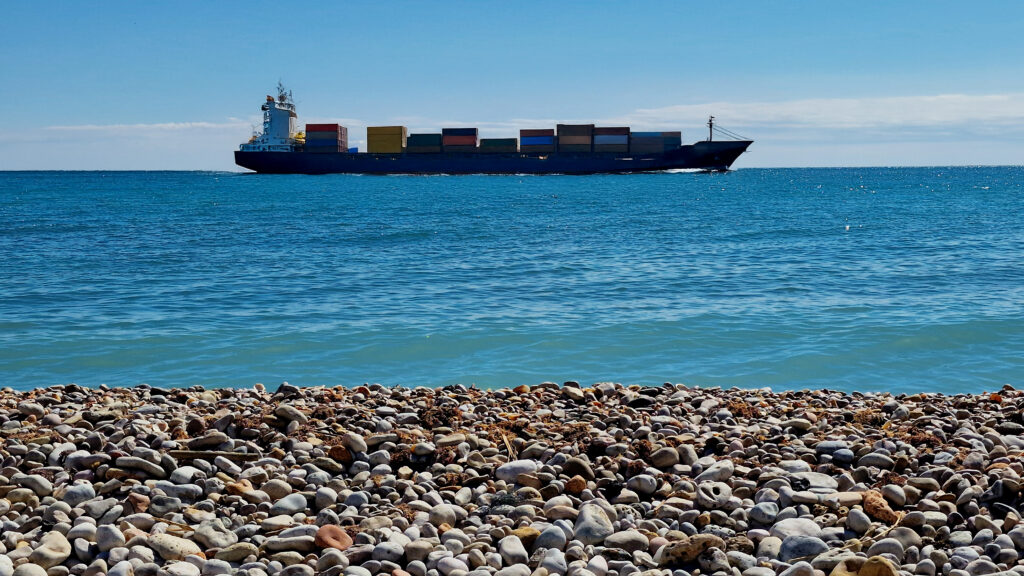
As the Strait of Hormuz has become inaccessible to most shipping vessels, Gulf oil exporters have had to resort to other methods to get their products into the marketplace. A few key pipelines have been essential in adapting to the war in Iran and the new market realities that have come about as a result.
Saudi Arabia’s East-West Pipeline – also known as the Petroline – has been doing the heavy lifting in moving oil from the Abqaiq oil processing center in the east to the Yanbu Port in the west. An average of 770,000 barrels per day (bpd) went through the pipeline in January and February. The average barrels per day rose to 2.9 million this week.
Meanwhile, in the United Arab Emirates there is the Abu Dhabi Crude Oil Pipeline (ADCOP), which runs from Habshan in Abu Dhabi to the port of Fujairah. In February, the pipeline averaged 1.17 million bpd, a figure which increased to 1.62 million bpd in March, per Kpler analyst Johannes Rauball.
While this increase in pipeline flows is helpful in the short to medium term, there is still a notable shortfall in global energy markets due to the closure of the Strait of Hormuz. Until the Strait is reopened, creative rerouting is not enough to prompt market dynamics to return to a pre-Iran war sense of normalcy.
A new chapter begins in U.S.-Venezuela relations
J.P. Carroll, Senior Advisor, Washington, D.C.
This week the U.S. Embassy in Caracas, Venezuela reopened and the United States lifted sanctions it had imposed on Venezuelan president Delcy Rodriguez. These actions signal that a corner has been turned just three months since the capture of now former Venezuelan President Nicolas Maduro by U.S. forces.
While much of the world is focused on the latest developments out of Iran, the latest news out of Venezuela may prove to be crucial in understanding what the United States will or will not do when it comes to Cuba. Venezuela maintained close ties to Cuba under both former presidents Hugo Chavez and Nicolas Maduro. Now as the Trump administration has effectively managed to secure key concessions from President Rodriguez, this may well prove to be the model it could seek to replicate with Cuba.
It remains to be seen what comes next for U.S.-Cuba relations. Arriving at an accommodation wherein the United States is granted greater economic access to Cuba, could be seen as being aligned with the Trump administration’s National Security Strategy published last year.